ESA Returns the First Metal 3D-Printed Thrusters Made on the ISS
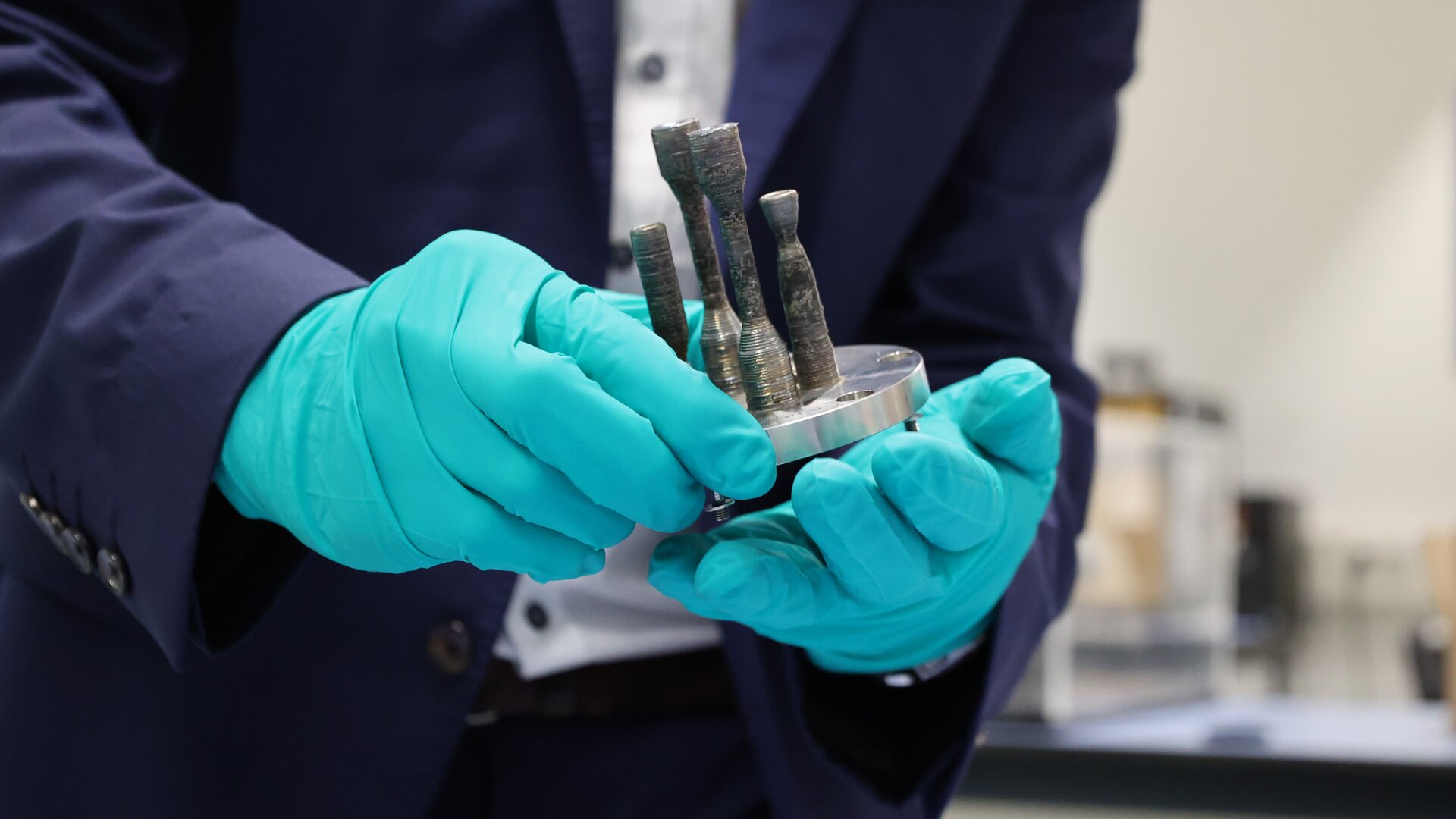
The European Space Agency has brought its fifth metal-printing sample from the International Space Station back to Earth. For the first time, the returned set includes small thrusters intended for satellite propulsion.
ESA Returns the First Metal 3D-Printed Thrusters Made on the ISS
Introduction: The European Space Agency has brought its fifth metal-printing sample from the International Space Station back to Earth. For the first time, the returned set includes small thrusters intended for satellite propulsion.
Metal Printing in Microgravity
ESA says the fifth sample set produced by the metal 3D printer in the International Space Station's Columbus module has returned to Earth. ESA astronaut Sophie Adenot retrieved the sample from the facility in July 2026; the return was reported in early October.
Two Small Satellite Thrusters
The new set includes two propulsion components designed by the German Aerospace Center (DLR). One version is printed close to its final geometry; the other has thicker walls so its internal diameter can be refined through post-processing.
Hot-Fire Tests Are Next
DLR plans to test the parts at its vacuum test facility in Lampoldshausen, Germany. The tests are intended to establish whether metal parts produced in orbit meet the dimensional accuracy required for propulsion and withstand representative operating temperatures and pressures.
Why It Matters
In-orbit manufacturing could eventually reduce the need to transport every tool and spare part on future space missions. This demonstration is not yet routine, qualified space manufacturing: repeatability, material properties and functional performance still need to be verified through testing on Earth.