Starship Flight 15: Historic Upper-Stage Tower Catch and the Role of 3D Printing
Early live reports indicate that Starship Ship 42 was caught at Starbase after returning from orbit. Booster 22 was not recovered. Here is why the milestone matters for metal 3D printing and a future beyond Earth.
A historic return: Starship's upper stage reaches the tower
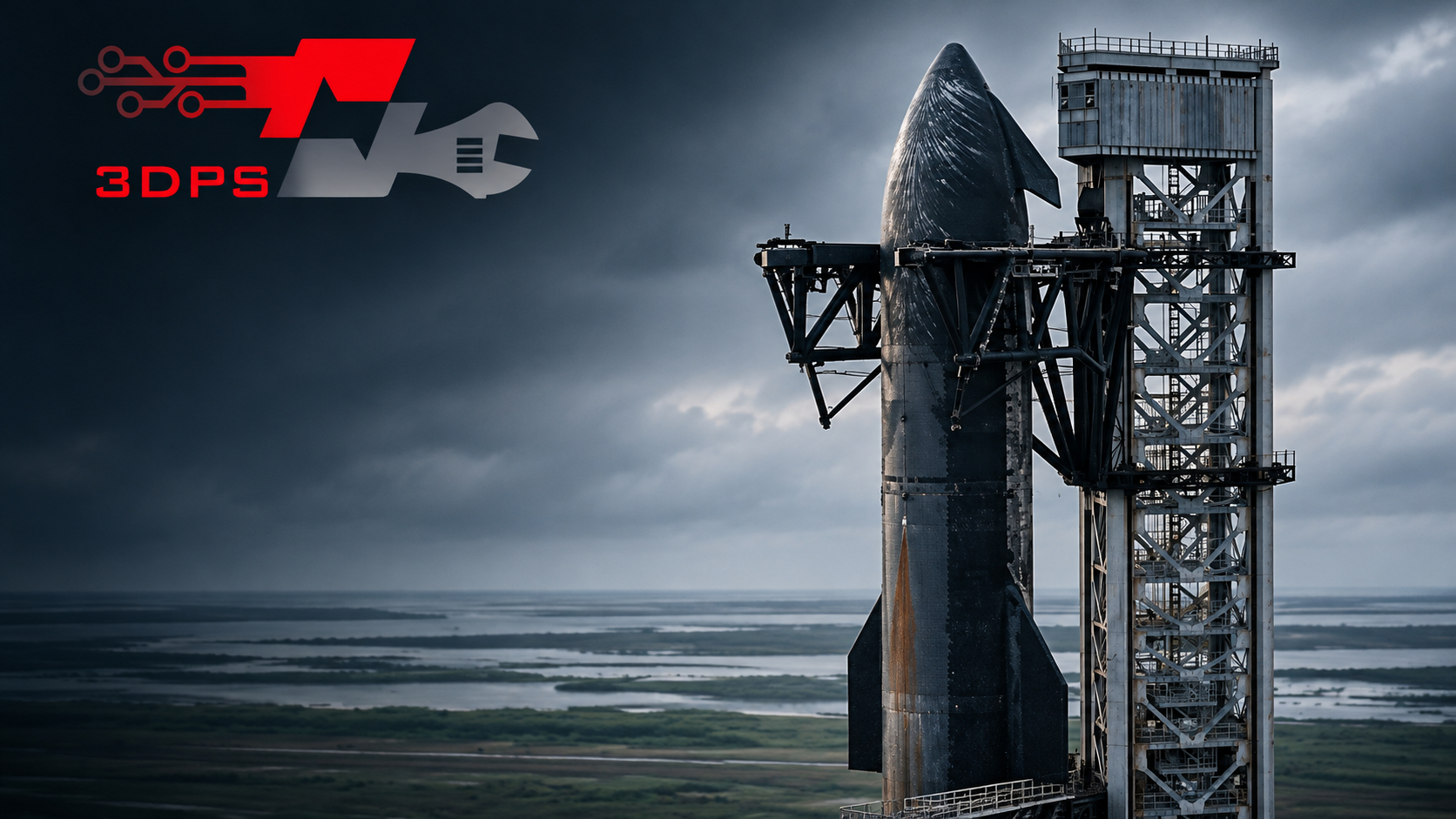
Early live and eyewitness reports from November 14, 2026 indicate that Ship 42, the upper stage of Starship Flight 15, was successfully caught by the mechanical arms of the launch tower at Starbase, Texas, at approximately 21:20 UTC. This was not a first-stage booster catch: it concerned the spacecraft returning from Earth orbit, after the much more demanding atmospheric reentry.
Breaking-news qualification (late November 14, 2026): eyewitness and live community accounts report a successful upper-stage catch. Major wire-service articles reviewed at the time still described the pre-catch phase; detailed official post-flight technical confirmation is pending.
What happened on Flight 15?
Launched on November 13, Ship 42 reached low Earth orbit, spent more than 22 hours in space across roughly 14 orbits, and deployed 26 Starlink V3 satellites. It then returned through the atmosphere, using its heat shield and engines to approach the launch tower.
The Super Heavy Booster 22 first stage was not recovered. Its automated systems aborted the planned tower catch and diverted it toward an offshore splashdown in the Gulf of Mexico. Consequently, Flight 15 did not achieve the planned double catch of both stages.
Why does an upper-stage catch matter?
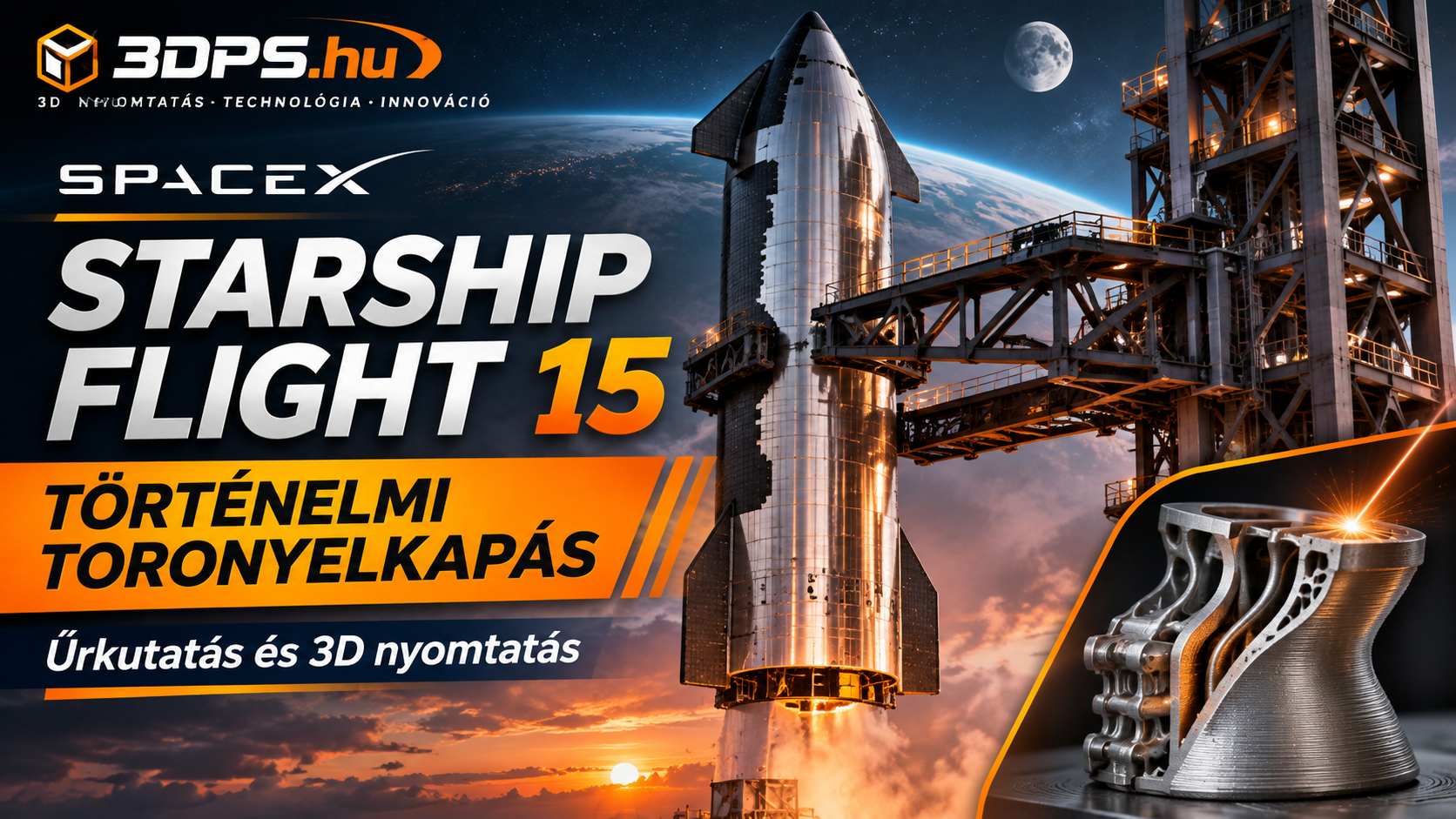
Conventional orbital launch systems typically expend their upper stages. Starship aims to make both stages reusable. Capturing a returning vehicle with launch-tower arms could reduce the need for onboard landing gear and help shorten the turnaround process.
However, a successful catch is not yet proof of routine reusability. Engineers must inspect the returned heat shield, engines and structure, refurbish the vehicle and eventually demonstrate another flight.
How does this connect to 3D printing?
Metal additive manufacturing is already an established tool in rocket engineering for complex combustion hardware, cooling geometries and production tooling. A concrete SpaceX example is the SuperDraco abort engine for Crew Dragon: NASA documents its Inconel combustion chamber produced using direct metal laser sintering (DMLS).
Another documented example relevant to Starship involves 3D-printed casting tooling used to produce components for Raptor engines. Desktop Metal/ExOne has presented printed molds and tooling for ducts and manifolds. A printed casting mold is not the same thing as a directly metal-printed flight part.
We do not have a verified part-by-part manufacturing record for Ship 42, and therefore cannot claim that a particular pictured component on Flight 15 was itself 3D printed.
What does this mean for the Moon, Mars and multiplanetary life?
A rocket system that can return, be serviced and fly again could make frequent transport of equipment, research payloads and infrastructure to space more economically feasible. Starship is intended to support future lunar and Martian missions, though considerable technical and operational milestones remain.
Manufacturing at the destination matters just as much as transportation. Additive manufacturing could help produce tools, replacement parts and eventually components from locally sourced materials rather than waiting for every shipment from Earth. That vision still requires reliable power, quality assurance and materials processing in extraterrestrial environments.
Multiplanetary settlement is a long-term aspiration, not an accomplishment of Flight 15. But reusable space transportation and flexible local manufacturing are complementary capabilities that can bring the goal closer.
Hungarian live coverage and sources
The Hungarian channel ŰRKUTATÁS MAGYARUL covered the return in its 128th livestream. We verified the video title and page metadata, not the complete livestream transcript.
- ŰRKUTATÁS MAGYARUL – IFT-15 return livestream
- SpaceX – official Flight 15 mission page
- Space.com – launch and cancelled Booster 22 catch
- Early eyewitness and community reporting on Ship 42 catch
- NASA – additive-manufactured SuperDraco chamber
- Desktop Metal / ExOne – printed tooling for Raptor components