WASP Develops Separable Earth-and-Plastic 3D-Printed Composites
Italian manufacturer WASP is combining earth-based paste extrusion with plastic-granule printing in a process designed to keep the two material groups separable at end of life.
WASP Develops Separable Earth-and-Plastic 3D-Printed Composites
Introduction: Italian manufacturer WASP is combining earth-based paste extrusion with plastic-granule printing in a process designed to keep the two material groups separable at end of life.
Two Extrusion Processes in One Part
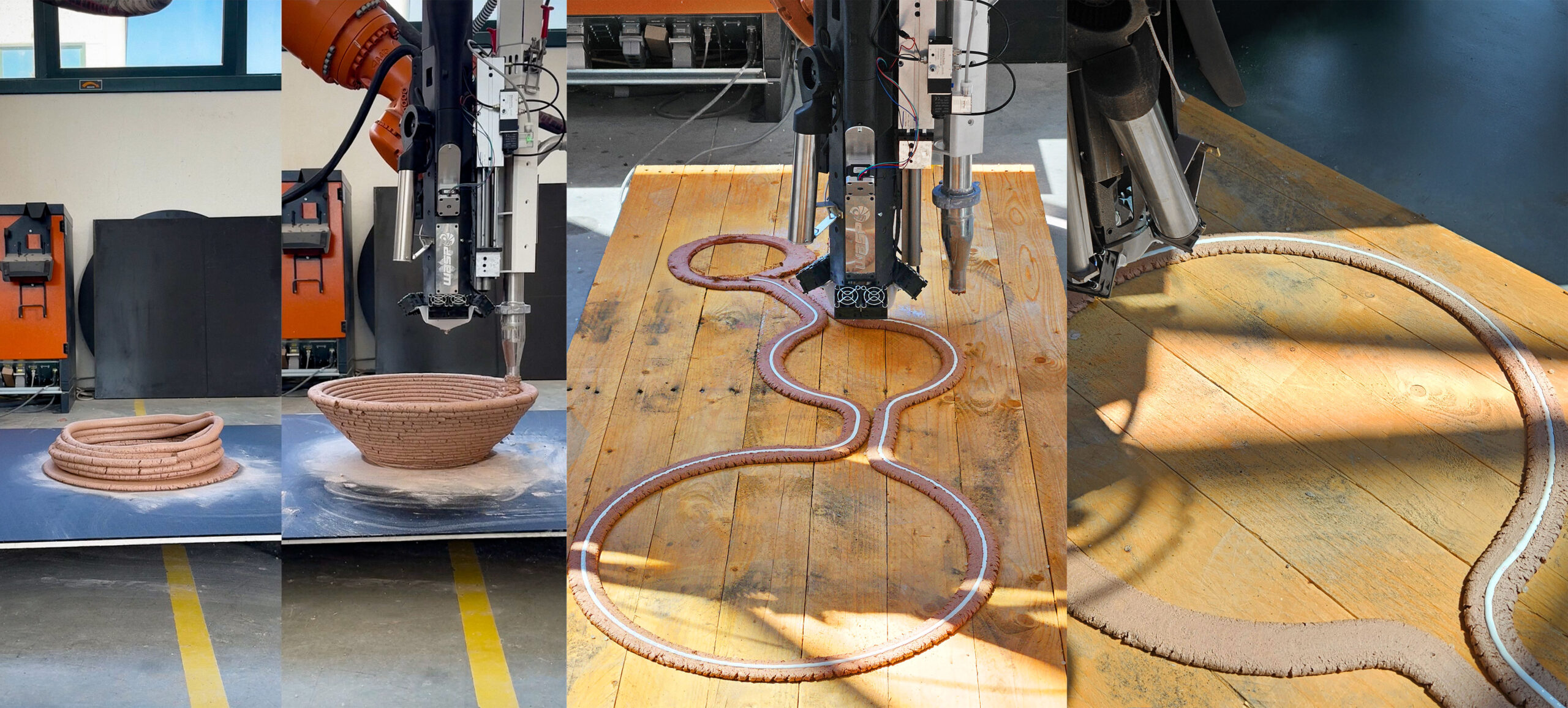
WASP is combining Liquid Deposition Modeling (LDM), used for earth- and clay-like pastes, with Fused Granulate Fabrication (FGF), which processes plastic granules. The two systems alternate layer by layer to build a single component.
Plastic Reinforcement Only Where Needed
LDM forms the main body of the structure, while FGF adds plastic reinforcement at locations where the earth-based material might otherwise deform or collapse. The goal is targeted reinforcement rather than coating the entire part in plastic.
Separable Rather Than Permanently Bonded
WASP describes the concept as a reversible composite: the plastic reinforcement is intended to separate from the earth-based material at end of life, allowing the material groups to be handled or recycled separately. This differs from conventional composites, whose constituents can be difficult to separate.
Still Under Development
The company has presented the process as patent-pending. Further testing is needed to establish geometric limits, material combinations, mechanical performance and reliable separation.