xPEI Uses Reactive Chemistry to Expand High-Temperature PEI 3D Printing
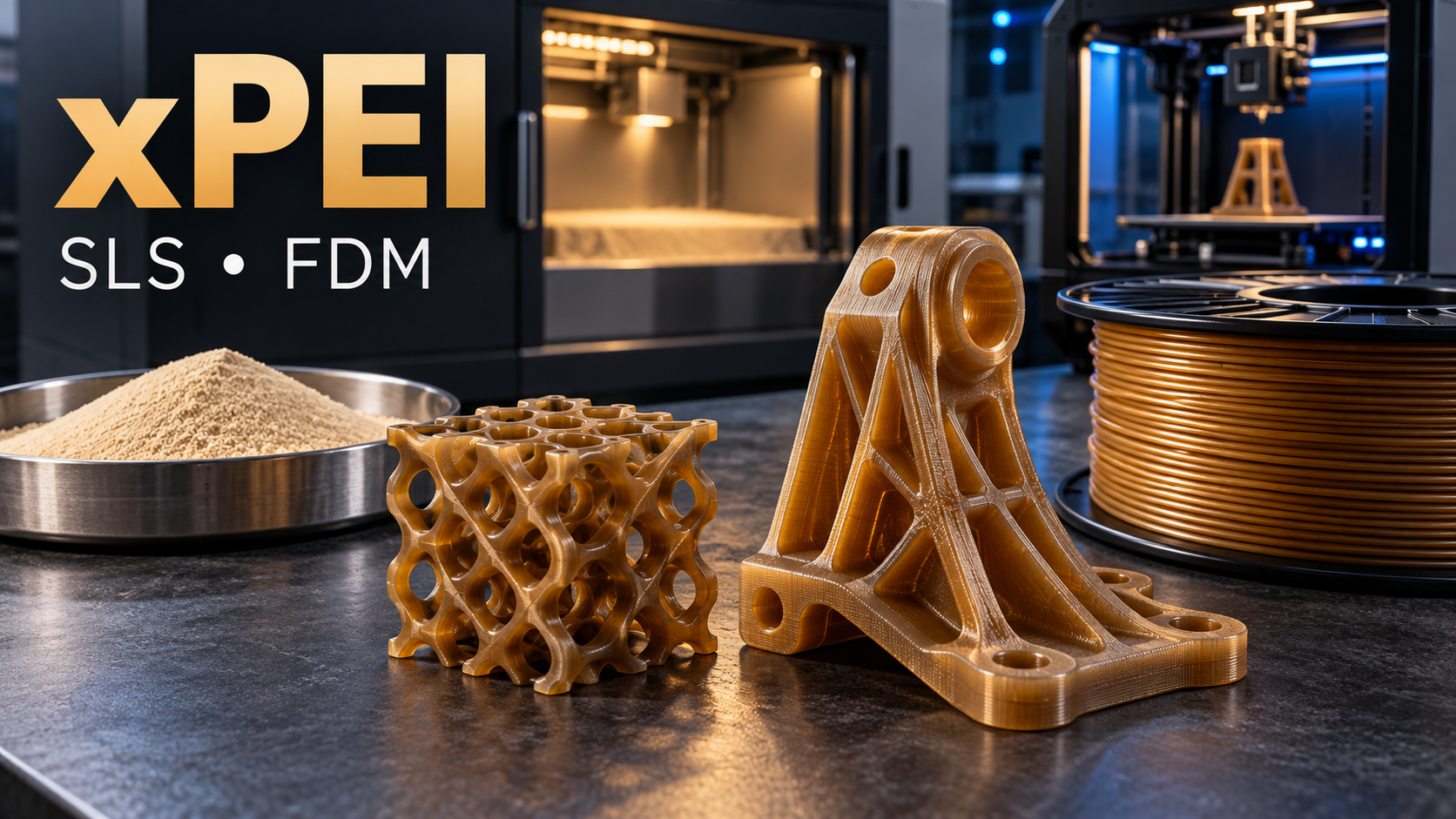
BlueSky Polymers, Insight Polymers and Advanced Laser Materials have developed xPEI, a reactive polyetherimide material intended to make high-temperature PEI more practical for SLS, with an FDM filament also planned.
xPEI Uses Reactive Chemistry to Expand High-Temperature PEI 3D Printing
Introduction: BlueSky Polymers, Insight Polymers and Advanced Laser Materials have developed xPEI, a reactive polyetherimide material intended to make high-temperature PEI more practical for SLS, with an FDM filament also planned.
Why PEI Is Difficult to Process
Polyetherimide (PEI) is a high-performance, heat-resistant thermoplastic, but its high melt viscosity makes it difficult to process with selective laser sintering. Insufficient diffusion between layers can result in anisotropic mechanical properties.
Reactive Post-Processing
The xPEI developers combine printing with a controlled thermal post-treatment. They say the material continues reacting during this stage, raising its glass-transition temperature and reducing layer-to-layer variations in mechanical properties. The powder is being developed for SLS; an FDM filament is also planned.
Potential Applications
The developers cite aircraft ducting, drone components, data-centre cooling systems, semiconductor test sockets and sterilizable medical instruments as potential applications. These are target use cases, not all verified serial-production examples.
Industrial Validation Still Ahead
Advanced Laser Materials has handled initial powder processing and SLS trials. The companies are now seeking pilot users to test the material under industrial conditions. Long-term thermal ageing, repeatability, cost and compatibility with specific machines remain important questions.